
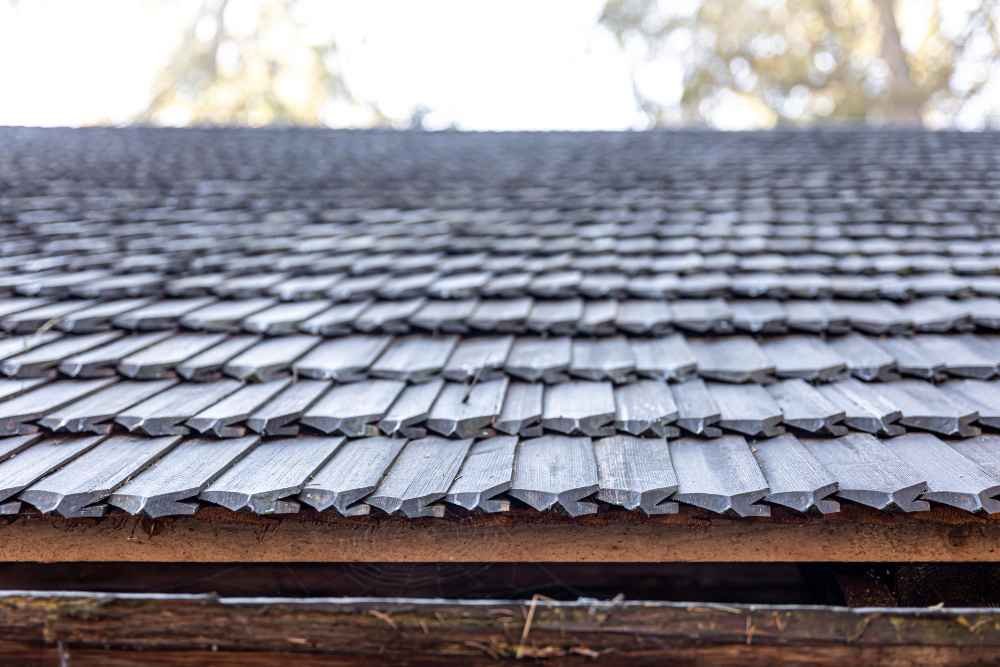
Walk down almost any residential street in London — whether you’re in Islington, Barnet, Bromley, or Brent — and you’re surrounded by pitched roofs. The classic Victorian terrace with its steep gable end, the Edwardian semi-detached with its elegant hip, the post-war housing estate with its shallow trussed roof. They’re everywhere. And yet most London homeowners have no idea what pitch their roof actually is.
That matters more than you’d think.
Your roof’s pitch — its angle of slope — directly determines which roofing materials can legally and safely be installed on it. Use the wrong tile for your pitch and you’re looking at leaks, failed warranties, potential Building Regulations violations, and insurance claims that simply won’t pay out. Over our 15+ years working on roofs across every London borough, the team at Obsidian Roofing has repaired more than a few roofs that failed for exactly this reason — not because the materials were poor quality, but because they were installed on a pitch they were never designed for.
This guide covers everything you need to know: what a pitched roof is, the main types found across London, how to calculate your own roof pitch safely, UK material minimums, local costs, and when to call in a professional.
Understanding Pitched Roofs — Types, Shapes, and London Examples
Defining a Pitched Roof
A pitched roof is any roof constructed with a deliberate slope, typically above 10 degrees. The slope — or pitch — serves a fundamental purpose: it uses gravity to direct rainwater down into the gutters and away from the structure. The steeper the pitch, the faster the water runs off, and the better the roof performs in heavy rainfall.
This is why pitched roofs have dominated UK residential construction for centuries. London receives an average of 600mm of rainfall per year, with the wettest months between October and January. A well-pitched roof handles that relentlessly damp British weather far more effectively than a flat surface.
The Main Types of Pitched Roof
Gable Roof — The most common type in London. Two sloping sides meet at a central ridge, with vertical triangular “gable” ends at each side. Found on the majority of Victorian terraces in Camden, Hackney, and Waltham Forest.
Hip Roof — All four sides slope downward to the walls. More aerodynamically stable and common on Edwardian semi-detached properties across Richmond, Wandsworth, and Merton. The sloping “hip” ends replace the vertical gables.
Mansard Roof — A double-pitched design with a steeper lower slope and flatter upper section. Very common on Georgian and Victorian townhouses in Westminster, Kensington & Chelsea, and parts of Islington. Often contains living space within the roof structure.
Lean-To / Mono-Pitch — A single slope attached to a wall, typically used on rear extensions and outbuildings. Common across all London boroughs. The pitch is critical here — too shallow and you’re in flat roof territory; too steep and you need full scaffolding access.
Gambrel Roof — Two slopes on each side, the lower being steeper. Less common in London but occasionally seen on older farm buildings converted in outer boroughs like Havering and Bromley.
What Pitches Are Typical in London’s Housing Stock?
Understanding the housing era gives you a strong starting point for understanding pitch:
- Victorian terraces (pre-1900): Typically 40°–50° — very steep, built for plain clay tiles
- Edwardian semis (1900–1920): Usually 35°–45°, hip or gable
- Inter-war housing (1920–1945): Often 30°–40°, concrete or clay tiles
- Post-war & 1960s estates: 22°–30°, often interlocking concrete tiles
- Modern new-builds (1990s–present): 17.5°–30°, engineered trussed rafters
If your London home was built before 1940, there’s a very high probability your roof is 35° or steeper — which means it was designed around natural slate or plain clay tiles. This is critical when choosing replacement materials.
How to Calculate Roof Pitch — Step-by-Step Guide for London Homeowners
This is the practical section most homeowners are here for. Let’s break it down clearly.
The Rise Over Run Formula
Roof pitch is calculated by dividing the vertical rise by the horizontal run.
- Rise = the vertical height from the top of the wall plate (where the rafters sit) up to the ridge board at the peak
- Run = the horizontal distance from the wall plate to the centre point directly below the ridge (half the total span)
So the formula is:
Pitch = Rise ÷ Run
This gives you a ratio (e.g., 6:12), which you can then convert into degrees using a simple trigonometry step.
Converting Rise Over Run to Degrees
To convert your ratio to degrees, use the arctan (inverse tangent) function:
Angle (°) = arctan(Rise ÷ Run)
Worked example:
- Rise = 1.5 metres
- Run = 3 metres
- 1.5 ÷ 3 = 0.5
- arctan(0.5) = 26.57°
Most scientific calculators and smartphone calculator apps have an arctan (tan⁻¹) button. Type in your rise-over-run result, press tan⁻¹, and you have your pitch in degrees.
Quick Pitch Conversion Table
| Ratio | Degrees | Description |
|---|---|---|
| 3:12 | 14.04° | Very low pitch |
| 4:12 | 18.43° | Low pitch |
| 5:12 | 22.62° | Medium-low |
| 6:12 | 26.57° | Medium |
| 7:12 | 30.26° | Medium |
| 8:12 | 33.69° | Medium-steep |
| 9:12 | 36.87° | Steep |
| 12:12 | 45.00° | Very steep |
Victorian London roofs sit predominantly in the 9:12 to 12:12 range — steep by modern standards, but built that way deliberately for longevity with traditional clay and slate materials.
How to Measure Roof Pitch Safely at Home
You do not need to climb onto your roof to measure its pitch. In fact, please don’t — we’ll cover that under safety warnings shortly. Here are three safe methods:
Method 1 — Spirit Level and Tape Measure (From Inside the Loft)
This is the most accurate and safest DIY method:
- Take a standard 300mm (12-inch) spirit level and a tape measure into your loft space
- Hold the spirit level horizontally against one of the roof rafters (the sloping timbers)
- Ensure the bubble is perfectly centred — confirming it’s level
- From the end of the spirit level that touches the rafter, measure vertically upward to where the rafter would be if extended
- That vertical measurement in inches is your pitch number — e.g., 7 inches = 7:12 pitch = 30.26°
Method 2 — From the Eaves Using a Long Level
Stand at the eaves of your roof and place a long spirit level (1 metre+) against the underside of an exposed rafter tail. The same rise-over-run measurement applies from outside.
Method 3 — Smartphone Roofing Apps
Apps such as RoofSnap, Pitch Gauge, or even the standard Measure app on iPhone (using LiDAR on newer models) can give a reasonable pitch reading. Useful as a quick check — but always verify with a physical measurement for any construction or material-procurement purposes.
 Safety Warning: Under the UK Working at Height Regulations 2005, working on a pitched roof above 2 metres requires appropriate fall protection — typically scaffolding or a roof ladder system. Each year in the UK, falls from roofs cause dozens of serious and fatal injuries. If your loft is inaccessible or you’d prefer a professional assessment, Obsidian Roofing offers free roof inspections across all London boroughs.
UK Minimum Pitch Requirements by Roofing Material
This is where your pitch calculation becomes critical. UK Building Regulations Part C (Resistance to Contaminants and Moisture) requires that roofing materials are installed at or above their minimum recommended pitch. Installing below this threshold risks water ingress, failed inspections, and voided warranties.
Minimum Pitch Table for Common UK Roofing Materials
| Roofing Material | Minimum Pitch | Key Notes |
|---|---|---|
| Natural Slate (Welsh / Spanish) | 22.5° | Double-lap required; some manufacturers allow 20° with specific underlay |
| Interlocking Concrete Tiles | 17.5° | Always check individual manufacturer spec |
| Plain Clay Tiles | 35° | Standard for Victorian London homes |
| Plain Concrete Tiles | 35° | Same as clay — traditional steep-pitch product |
| Fibre Cement Slates | 15° | Low-pitch systems available with correct underlay |
| Clay Pantiles | 30° | Common in heritage areas of East and South-East London |
| EPDM Rubber (flat / near-flat) | 1°–2° | Ideal for extensions, bay roofs, and flat-section roofs |
| Lead Sheet | 6° | Valleys, parapet gutters, abutments |
| Corrugated Metal Sheeting | 10° | Outbuildings and commercial |
If you’re in a London conservation area — such as parts of Camden, Westminster, Kensington & Chelsea, or Islington — you may also be required to match the original roofing material exactly. This is where a roofer with real local knowledge becomes essential, not just a price comparison.
What Happens If You Install Below the Minimum Pitch?
In our experience across London, this is one of the most common causes of preventable roof failure. Here’s what goes wrong:
- Water backs up under tiles — capillary action draws water uphill against the intended drainage direction
- Tiles lift in high winds — London sits in Wind Zone 2–3; under-pitched tiles are more vulnerable to uplift
- Manufacturer warranty is immediately voided — the warranty card is worthless if pitch isn’t compliant
- Building Regulations non-compliance — a problem if you ever sell the property or make an insurance claim
- Structural moisture damage — wet rafters, rotting felt, and eventual ceiling damage
A quote we hear regularly: “The last roofer said these tiles would be fine.” They often aren’t. The minimum pitch figures in the table above aren’t suggestions — they’re engineering thresholds.
Pitched Roof Challenges Specific to London Properties
London isn’t just any city. Its unique combination of Victorian and Edwardian housing, dense urban geography, specific weather patterns, and strict planning constraints creates roofing challenges you simply won’t find elsewhere in the UK.
London’s Weather and What It Does to Pitched Roofs
London’s rainfall is relatively modest in volume — around 600mm per year — but its year-round consistency creates specific problems:
- Freeze-thaw damage — temperatures regularly cycle above and below 0°C between October and March, cracking old mortar on ridge tiles and hip cappings. This is especially prevalent in elevated boroughs like Barnet, Enfield, and Haringey
- Moss and algae growth — north-facing pitched roofs in leafy boroughs such as Richmond, Bromley, and Kingston upon Thames can develop significant moss cover within 3–5 years, trapping moisture and lifting tile edges
- Wind uplift — exposed properties in outer boroughs like Havering, Bexley, and Hillingdon face higher wind loads, making proper nail fixings and the correct minimum pitch critical
Victorian and Edwardian Housing Stock
The majority of London’s housing was built between 1880 and 1939. This means:
- Original oak or pine rafters still carrying the load — often still sound, but worth inspecting when re-roofing
- Lime mortar bedding on ridge tiles — durable but eventually needs re-pointing every 15–20 years
- Original plain clay tiles at steep pitches — beautiful when maintained, but increasingly difficult to match exactly for colour and profile
- Absence of underlay in many pre-1950 properties — modern re-roofs will include breathable felt as standard, improving weathertightness dramatically
If your home is in a Conservation Area or is a Listed Building — common across Camden, Westminster, Kensington & Chelsea, Southwark, and Islington — any significant roofing work may require either a Certificate of Lawful Development or full Planning Permission. Always check before you start.
The Urban Heat Island Effect
Dense central London boroughs are measurably warmer than the surrounding countryside — sometimes by 3–5°C. This creates more pronounced thermal expansion and contraction cycles in roofing materials, accelerating the degradation of ridge mortar, lead flashings, and older bitumen-based felts. If your property is in Lambeth, Southwark, Tower Hamlets, or Westminster, this is worth factoring into your maintenance schedule.
How Much Does a Pitched Roof Cost in London? (2025 Price Guide)
Pitched roof costs in London are higher than the national average — reflecting higher labour rates, scaffolding costs, and the complexity of working on densely packed terraced streets.
Key Factors Affecting Cost
- Pitch angle — steeper roofs require more scaffolding time and more tiles per m² of plan area
- Roof area — measured in m², the larger the roof, the higher the material and labour costs
- Material choice — natural Welsh slate sits at the premium end; concrete interlocking tiles are more economical
- Access — a narrow North London terrace street with no front driveway means crane-off lorry deliveries and longer material carries, adding cost
- Heritage requirements — matching original handmade clay plain tiles or Welsh blue slate adds significant materials cost and sourcing time
Typical Pitched Roof Costs in London (2025)
| Roofing Job | Approx. Cost (London) |
|---|---|
| Full re-roof — natural slate, 3-bed terrace | £5,500 – £9,000 |
| Full re-roof — concrete tile, 3-bed semi | £4,000 – £7,000 |
| Ridge tile re-bed and re-point (full ridge) | £800 – £1,800 |
| Partial re-slate (20–30 slates) | £300 – £700 |
| Hip tile replacement and re-bed | £600 – £1,200 |
| Lead valley replacement | £500 – £1,000 |
| Scaffolding (per week, London average) | £800 – £1,400 |
| Professional roof inspection / survey | Free – £150 |
Obsidian Roofing provides free, no-obligation quotes and free roof inspections across all London boroughs. Call 07488 777726 or complete our quote form online.
Pitched Roof Maintenance Tips for London Homeowners
A well-maintained pitched roof will outlast its warranty by decades. These are the maintenance habits our team recommends to London homeowners based on real experience across the city’s housing stock.
Annual Pitched Roof Maintenance Checklist
 Autumn (October): Inspect ridge tiles and hip cappings for cracking, lifting, or loose mortar — winter freeze-thaw will worsen any existing movement
- Clear gutters in October and again in March — particularly important in leafy outer boroughs like Barnet, Bromley, Richmond, and Ealing
- Check lead flashings around chimneys and wall abutments after any period of heavy rain
- Binocular check from street level twice per year — look for slipped slates, missing tile nibs, or lifted ridge tiles
- Inspect loft space after heavy rain — run your torch along rafters and felt for moisture patches or drips
- Moss treatment every 2–3 years on north-facing slopes — apply a biocide wash (not a pressure washer, which damages tile surfaces)
- Re-point ridge and hip mortar every 10–15 years depending on exposure
 Autumn (October): Inspect ridge tiles and hip cappings for cracking, lifting, or loose mortar — winter freeze-thaw will worsen any existing movement
Early Warning Signs Your Pitched Roof Needs Attention
Don’t wait until water is running down your bedroom wall. These are the signs to act on early:
- Damp patches or tide marks on top-floor ceilings after rain
- Cracked, lifted, or displaced ridge tiles visible from the street
- Granule deposits from old tiles collecting in gutters
- Visible sagging along the ridge line (structural concern — call us immediately)
- Daylight visible inside the loft space (pointing to missing tiles or slates)
- Persistent moss growth on south or east-facing slopes (often indicates a north-facing dampness problem opposite)
When to Call a Professional Roofer in London
There’s a clear line between sensible DIY observation and dangerous amateur roofing. Here’s where that line sits:
You can safely do this yourself:
- Inspect your roof from ground level with binoculars
- Check your loft interior for moisture or daylight
- Measure your pitch from inside the loft using the spirit level method above
- Clean gutters from a stable ladder (with a second person present)
Call Obsidian Roofing immediately if:
- You notice any structural sagging, dipping, or movement along the ridge line
- Water is reaching your ceilings or running down interior walls
- You need to replace more than 8–10 tiles — this requires scaffolding under Working at Height Regulations
- You’re planning a loft conversion (your existing pitch directly affects head height compliance under Part K)
- Your property is in a Conservation Area or is Listed — penalties for unpermitted roofing works in London can be severe
- You’ve had a report of storm damage and need an emergency inspection
- You’re buying a London property and want an honest pre-purchase roof assessment
“With 15+ years working on London roofs from Havering to Hillingdon, we know exactly what to look for. Our team can assess your pitch, condition, and material compliance in one visit — and that visit is completely free.”
Pitched Roof Services Across London — Areas We Cover
Obsidian Roofing is based in NW6, giving us fast access across North and West London, but our team works across all 32 London boroughs, seven days a week.
North London: Barnet, Enfield, Haringey, Camden, Islington, Hackney
East & North-East London: Tower Hamlets, Newham, Waltham Forest, Redbridge, Barking & Dagenham, Havering
South-East London: Southwark, Lewisham, Greenwich, Bexley, Bromley
South & South-West London: Lambeth, Croydon, Sutton, Merton, Wandsworth, Richmond upon Thames, Kingston upon Thames
West & North-West London: Hillingdon, Hounslow, Ealing, Brent, Hammersmith & Fulham, Kensington & Chelsea, Westminster, Harrow
Whether you’re in a Victorian terrace in Hackney, an Edwardian semi in Richmond, a 1930s bay-fronted property in Ealing, or a modern townhouse in Stratford, we have the experience and local knowledge to get your pitched roof right.
Why London Homeowners Trust Obsidian Roofing LTD for Pitched Roof Work
There are hundreds of roofing companies operating in London. Here’s why our clients — many of them returning customers or word-of-mouth referrals — choose Obsidian Roofing:
- 15+ years hands-on experience specifically on London’s housing stock — Victorian, Edwardian, inter-war, and modern
- Family-run business — when you call us, you speak to someone who actually knows roofing, not a sales agent
- Deep knowledge of London’s conservation and planning requirements — we know which boroughs require consent and which don’t
- Full UK Building Regulations compliance — every job we complete meets Part C and Part A requirements as standard
- 5.0 stars on Google — 96 verified reviews from real London homeowners
- Trusted Trader verified — independently assessed and accredited
- Free quotes and free roof inspections — no hard sell, no obligation
- 24/7 emergency roof repair service — because leaks don’t keep office hours
- No job too big, no job too small — from a single slipped slate in Islington to a full re-roof in Bromley
“I got 3 quotes from different companies, and what stood out for me was the clear communication from the quote stage to the finished job.” — Verified Google Review
“I had Obsidian Roofing carry out a loft conversion at my home, and I couldn’t be happier with the results. The quality of workmanship was excellent, and they paid great attention to detail throughout the project.” — Verified Google Review
Get Expert Pitched Roof Advice in London — Free Quote from Obsidian Roofing LTD
Your pitched roof is not just an architectural feature — it’s the primary barrier between your home and London’s weather. Knowing your roof’s pitch is the foundation of every good roofing decision: which materials are correct, what the installation will cost, whether your existing roof meets UK Building Regulations, and how long your roof will realistically last.
If you’re unsure about your roof’s pitch, its current condition, or whether it complies with current standards — don’t guess and don’t leave it.
Contact Obsidian Roofing LTD today for a completely free roof inspection and quote. Our experienced team covers every London borough, responds typically within 2 hours, and will give you an honest, expert assessment with no pressure and no obligation.
 Call: 07488 777726
 Email: info@obsidianroofing.co.uk
 Based: 46 Barlow Road, London NW6 2BJ
Get a Free Roofing Quote in London →
View Our Slating & Tiling Services →
EPDM Rubber Roofing for Low-Pitch Sections →
Internal Linking Suggestions
| Anchor Text | Target Page |
|---|---|
| slating and tiling services in London | Slating & Tiling service page |
| EPDM rubber roofing for low-pitch extensions | EPDM Rubber Roofing service page |
| emergency roof repair in London | Emergency Roof Repairs page |
| chimney repairs and lead flashing in London | Chimney Repairs service page |
| flat roof specialists in London | Flat Roofs service page |
| get a free London roofing quote | Contact / Quote page |
| fascias, soffits and guttering London | Fascias & Soffits / Guttering page |
| our recent roofing projects in London | Gallery page |
| about Obsidian Roofing LTD | About page |
| lead roofing and valley repairs London | Lead Roofing page |
Frequently Asked Questions — Pitched Roofs in London
What is a pitched roof?
A pitched roof is any roof built with a slope greater than 10 degrees, designed to shed rainwater efficiently into gutters and away from the structure.
How do you calculate roof pitch in the UK?
Divide the vertical rise by the horizontal run, then use arctan to convert to degrees — for example, a 1.5m rise over a 3m run equals 26.57°.
What is the minimum pitch for natural slate in the UK?
The minimum pitch for natural slate under a standard double-lap installation in the UK is 22.5 degrees, as specified by most manufacturers and UK Building Regulations Part C.
What roof pitch is standard for Victorian houses in London?
Most Victorian terraced and semi-detached properties in London have pitches between 40° and 50°, designed originally for plain clay tiles or natural slate.
Does roof pitch affect cost in London?
Yes — steeper pitches require more scaffolding time, more tiles due to increased surface area, and more complex fixing, increasing the overall cost of roofing work in London.
Can I measure my roof pitch without going on the roof?
Yes — place a 12-inch spirit level horizontally against a rafter in your loft, measure the vertical gap at the 12-inch mark, and that measurement in inches is your pitch number.
Do I need planning permission to re-roof my London home?
Most like-for-like re-roofs do not require planning permission, but properties in Conservation Areas or those that are Listed Buildings — common across Camden, Westminster, and Kensington & Chelsea — may require consent before work begins.
Published by Obsidian Roofing LTD — London’s Trusted Roofing Specialists | 15+ Years Experience | 5.0  Google Rating